Wednesday, May 15, 2013

Spirits in Rock


In my trek across the southwest, from Grand Canyon to Carlsbad Caverns, I stopped at a series of Native American archeological sites: The Canyon's Tusayan Ruin and Sky Tower; Wapatki National Monument; and Petrified Forest National Park. I saw the petroglyphs, the pictures and stories etched in stone by tribal artists, hundreds or thousands of years ago (up to 2,000 years, in the case of Petrified Forest). As I too tell stories with pictures, I felt a special connection to these indigenous cartoonists, across the gulf of time. After this brush with prehistory, I opened my sketchbook, and borrowed a few of the characters from the petroglyphs: a kachina (mysterious holy being) and the crested serpent, who is associated with water.  Perhaps the bit of the earthly breath that I caught at Wapatki's famous blowhole gave me inspiration.


Soon, I will post pictures and stories from my Grand Canyon hike....

Tuesday, April 30, 2013

Revisiting past lives, in the midwest and southwest


With or without reincarnation, most of us have had multiple lives. In every new community, and every new work or school, there is some sense of re-invention and redefinition of roles and parameters. When revisiting the past, you both can and can't go home again. Upon return to an old home, there is a ring of familiarity, and a gulf of distance.

I experienced all of this on my latest road trip, going west, from Morgantown, West Virginia, to Grand Canyon, Arizona. My first two-night stop was in Granville, Ohio, and The Homestead at Denison University, the community of my defining years. This year, winds of change have swept across The Homestead. The university administration determined that, in order to bring the collective up to modern-day safety standards, the original cabins (built in 1977 and '78), must go. They shall be replaced by a new cabin, a green structure insofar as possible, but one containing a sprinkler system to defend from fires, and temperature-control so the sprinklers can function. Not quite as spartan as The Homestead I knew. This summer, all Homesteaders will be employed in an intensive effort to construct the new cabin, so some can move into it this fall. Therefore, for The Homestead, the summer of 2013 shall be very similar to the summer of 1977. In both, Homies worked feverishly to build their own houses, and used outside professional and volunteer helped wherever needed.

The Homestead residences, right to left: Cabin One, 1977; Cabin Phoenix, 2008; the new cabin, under construction

Originally, Homestead founding visionary Dr. Robert Alrutz proposed the demolition of old cabins and construction of new ones every five years, to give more students the knowledge and rewards of building their own living spaces. Instead, two of original three cabins have lasted for 36 years, while one was lost to fire in January 2000 (no people were harmed in the event.) Since 1999, The Homies have added a strawbale “community center” called Cabin Bob (named in honor of Robert Alrtuz); an earthship “Cabin Pheonix” to replace the building lost to fire; an new outhouse, insulated with bottles and cans; a toolshed; an improved solar-electrical system; a rainwater-catchement system; new gardens and orchards; a new chicken-house; and much more. Each cabin has its own unique life, personality, and story. And, like all people, governments, and civilizations, the cabins don't last forever. “Cabin Three” lasted from 1978 to 2013. Recently, workers demolished it to make space for the new structure. Homesteaders have a tradition of writing on the walls, to share their own reflections, and those of literary figures. Sometime in the past, a visitor to The Homestead wrote on the wall of Cabin Three: “This place is a fantasy. May it forever be.” I hope that the spirit of Cabin Three will live on, a benevolent haze, sometimes inhabiting the new structure. 

 Cabin Bob, the community center, with residential cabins in background

Right now, The Homestead looks like a construction site in the woods. Professionals of various sorts are hard at work on the new cabin, first laying the foundation. They make preparations for the student labor, the bulk of which will take place in the summer. And so, this visit to The Homestead was a little disorienting, as I walked through fields of mud from upended earth, past parked bulldozers and backhoes. Somehow, the workers moved the toolshed, which is the size of a small cabin, to a new location (with a crane?). And they knocked down many trees in front of Cabin Bob, to create more garden space. The Homies have pledged to plant trees this summer, to compensate for the ones felled. It is a time of upheaval, but the familiar Homestead magic is present. I am certain that something beautiful will grow from The Homestead's chaotic new developments, like the beautiful Crater Lake, formed in the tumult of volcanic eruptions. My regret is that I will not be there this summer, to bring the new cabin to life with hand and hammer and saw. I have the utmost faith in the current Homies, but I will miss the first-hand experience of building.

After The Homestead, my westward voyage resumed. Fortunately, I had multiple friends and relatives to visit along my long road trip, and so I escaped the full effect of the “lonely road.” I stopped in St. Louis Missouri, and saw my aunt, the famous film scholar Gaylyn Studlar, and her husband Thomas Haslett. I enjoyed their company, their cats, an some good food before I proceeded west on I-40. Institutionalized nostalgia for Route 66 permeated much of the Interstate through Missouri. There was even a public rest area covered in Route 66 installation art. And when I passed the multitudinous four-color hand-painted billboards and barn-ads for Merrimec Caverns, I felt I had passed through a time-warp. I made a brief stop at the caverns, passed an old-fashoined “zoo”, and was dissapointed to find the Jesse James wax museum was closed.

Route 66-themed rest stop

And then the road took me to Stillwater, Oklahoma, one of my childhood homes, where I have not set foot in 20 years. In Stillwater, the earth is flat, at least locally. I revisited old family friends, discussed comics and science fiction literature, and visited the former home of Chester Gould, creator of Dick Tracey, and, possibly the most famous student of Oklahoma State University. I revisited my Alma Mater, Will Rogers Elementary, where I struggled with multiplication tables, and developed skills in tetherball and four square. I saw our old stone house, which had been painted a uniform dark brown by new owners. Sadly, the scotch pine that I planted in the yard no longer stood. But the big tree in the backyard, site of my makeshift tree houses and my birthday pinatas, was still there. I walked in “the fields” at the end of the street behind our old house, with its open prairie, thickets of juniper, and hills. As a youngster, I took more than a few thrill rides in a big red wagon down the hills, over bumps and jumps and mud-slicks. And I held cap-pistol battles with friends on the sandy mounds. I brought box-turtles home from the fields, and fed them strawberries and earthworms, before releasing them back to the wild. 

The flat "fields" of Oklahoma
To the nostalgic visitor, Stillwater, Oklahoma seems much like the peaceful, friendly, quintessential western American small town. I felt like I had stumbled into a Ray Bradbury story, and was exploring Green Town, Illinois. I waited for the haunted carnival or the enchanted doll or the rocket ship to Mars to show up.

A childhood home

In Texas, I visited Palo Duro Canyon State Park. I hiked to the canyon's base, breathed the dry canyon air, experienced the sun, already formidable in April. I trekked across expansive landscapes of cliffs and chasms, where bright yellows mixed with dark greens, from the plant life. Ravens flew overhead. The trail below my feet, like much of the infrastructure at Palo Duro (and at national and state parks and public lands all over the country), was built during the Great Depression by the Civilian Conservation Corps (CCC). Every time I observe these lasting accomplishments by hardworking young men, I lament that no comparable program has been launched in response to the contemporary economic crisis. I advise the president and congress: it's not too late to end the “sequester” and launch a “green new deal.”

Palo Duro Canyon

I made sure to have a full gas tank and several full containers of water before I crossed the deserts of New Mexico and Arizona--”Indian Country.” Interstate 40 took me across many hundreds of miles of hot and dry landscapes of rock, cast in orange and yellow and red, dotted with yucca and sage. For a desert, it was surprisingly populated, with truck stops and gas stations at regular intervals, and many outposts and trading posts purveying Native American jewelry and souvenirs. (A lonely gas station in a desolate part of the desert had bathrooms decorated with large sheets of paper, where travellers could write something about their trips.) Public “rest areas,” however, were disturbingly rare. Many rest areas, especially in Oklahoma, were deemed “closed.” Evidently, in the age of austerity, even these small spaces of break and relief from the road, where one can picnic or walk among among trees or cactus, are on the chopping block.  A rare rest-stop in Arizona allowed me the opportunity to photograph myself among the rocks:

 Arizona stones

I had some long, long days of driving. Alone among mega-trucks, able to see the horizon many miles away, beneath the panoramic sky which accompanies flat land. Entertained by audiobooks, fueld by trail mix, submarine sandwiches, hot tea, and saving coffee for when I needed it. I watched the miles to my destination tick away on my GPS, and occasionally updated friends and family with my cell phone. Although guided and aided by devices that travelers on the old Route 66 did not even imagine, my mode of travel was distinctly similar to theirs. I drove an automobile, burned petroleum in the internal combustion engine, released toxic fumes, and caused global warming. While communications technology has matched or exceeded the wild visions of science fiction, transportation technology remains mired somewhere in the mid-twentieth century.

The road took me through Albuquerque and past the petrified forest, and, finally, to the Grand Canyon. Here, I make a multi-day stop, a welcome relief from driving all day. I will take a backpacking trip in the Canyon with my friend Lesley, who is now a volunteer ranger for the park's environmental education program. And I'll revisit memories of past visits to the Canyon, including ambitious hikes to the Colorado River and back, first with a group of scouts in my teenage years, and then with my comrade Dave in my college days. In my new hike, I shall again face the fearsome sun above and unforgiving rocks underfoot. And I shall feel the rewards of travelling by means of my own bones and muscles.

The Grand Canyon

After Grand Canyon, my final destination will be another National Park: Carlsbad Caverns. There, I shall be a seasonal park ranger. Luckily, I was not “sequestered.” After four stints at Crater Lake, I have found a new site of natural beauty to interpret. In advance, I have been trying to learn all I can about bats and cave life. I anticipate majestic scenery, above and below ground. I prepare for mystery and challenge, and crawls through narrow passageways lit by headlamp. The nightly mass exodus of Mexican free-tailed bats from the cave shall be a wonder to behold, and an honor to give an introductory speech for.

Evidently, I won't be the only Studlar revisiting past lives this summer. My father, the famous political scientist Donley Studlar, had a special nostalgia for Carlsbad, New Mexico, and its fabled caves. The town was his family home for one year, when he was in third grade, and his father pursued oil drilling work in varied parts of the southwest. Upon learning that I was going to Carlsbad, my dad dug through his multitudinous piles of papers and souvenirs, and retreived a 1950's informational booklet about Carlsbad Caverns, and his school picture from Joe Stanley Smith Elementary, over 55 years old.

In my latest western sojourn, there are many nostalgic returns, but also fresh opportunities. Taking guidance from the past, I plan to make something good and new.


Blogger's note: I wrote most of this entry on April 26, 2013. I have subsequently had my Grand Canyon adventure, and gathered some great pictures of reptiles, plants, and the like. I'll post them soon.

Tuesday, March 26, 2013

The Quest for Mountain Justice


I had many formative experiences in the forests of West Virginia, my home state. I hiked to the top of Shavers mountain, sledded down the slopes of Chestnut Ridge Park, ate wild clover, used sassafras to make blazing campfires, and built shelters from forest debris and slept inside. The state slogan is “wild and wonderful” for a reason. But my home state is also a war zone. In the mountains and hollers, hidden from the view of city-dwellers, behind orange fences and threatening signs against trespassing, a small number of workers drive giant machines. The machines cut down the forests, and bombs detonate the tops of mountains. Every week, an explosive force equivalent to one Hiroshima bomb strikes Appalachia. They dump the mountain's remains into nearby streams; then throw down some grass seeds and call the land “restored.” This process, called mountaintop removal, obliterates widlife and soil, contaminates rivers, and gives people cancer and birth defects. Now, hydraulic fracturing (or “fracking”) has also made inroads to West Virginia. Giant towers inject poisoned fluids deep into the Earth, to break up the rocks and create seams for extraction of methane fuel (or “natural gas” if you prefer the euphemism.) The process converts pristine mountains into energy factories, and pollutes air and water.  In mid-March, I came to know both of these extractive industries, in a more direct, up close and personal way than I ever had before. And I partook in an effort against these destructive approaches and for a clean energy future. I attended Mountain Justice Spring Break


We, the people of Mountain Justice Spring Break, came from all over the United States (and from other countries, such as Sweden.) Our 150 or so participants included many college students, as well as diverse professionals, and local residents. We assembled in the Doddridge County Park, located in the heart of the Appalachian mountains, near to extensive coal mining and marcellus shale drilling. Trucks loaded with fracking fluid rumbled past the park, day and night. The March weather was of the winter, with gray skies, cold, and snow. Nonetheless, we set up tents on the grounds, next to a mountain stream—wherein, on the first evening, I saw a band of mergansers out for a swim. It was the first time I had encountered the diving ducks in Appalachia! We also set up shop at the Lodge Building, which provided us with dining hall, dormitory, and classroom, all in the same structure. We had to keep a security watch round-the-clock, for detractors with bad intent.

While we called ourselves Mountain Justice, the local people called us “the protestors.” Even though we held no local protest this time around (our day of action happened in Charleston), our presence still caused a stir, and prompted local discussion about the economy and environment, and preparedness for disruption.

At Mountain Justice Spring Break, the week's schedule consisted of one presentation, one workshop, one field trip, after another, after another, after another. I stayed busy, and struggled to make time to setup my tent or brush my teeth. We learned about extractive industries, such as coal, nuclear, and methane (“natural gas”), their repercussions for human and environmental health, and ways to take a stand for a better world. We also learned and practiced internal anti-oppression, and developed our skills at climbing trees via rope (in preparation for a tree-sit, should we choose to hold one at a future date.) We learned about the power of nonviolent direct action for stopping environmental destruction in its tracks. Mountain Justice considers direct action a viable option, but only if the local community requests it. This time, they did not.


Our guest-speakers included Emily Bee of the Beehive Design Collective, who presented their visual map (or poster) of "The True Costs of Coal." The Bees never fail to amaze. Every square millimeter of their intricate visual maps is loaded with information, symbolism, and passion. Comics at its best.  “The True Costs of Coal” is a story told through juxtaposed still pictures, therefore comics, as I see it.  The narrative is so packed with meaning and complexity that I would even call it a graphic novel. 

We visited the home of Diane Pitcock, the Program Administrator of West Virginia Host Farms. She came to rural West Virginia to retire to a quiet home in the woods. And then drillers of the Marcellus Shale built a fracking operation directly adjacent to her mountain home. From beside the bonfire in her backyard, I stood under the glare of halogen lights, from the tower that loomed on the horizon, like a tripod from the planet Mars, injecting poison into the Earth. Diane explained that in the past, she held bonfires to the tune of owls and coyotes. Now, lights blaze and trucks and machinery rumble and churn, day and night. She receives no compensation for the natural resources extracted, even from beneath her property, due to claims over mineral rights. And the contents of the toxic “frack brew,” syringed underground beneath her land and well, are a proprietary secret. While the companies claim that the fracking fluid never contaminates drinking water, the “faucet fires” of the film Gasland make a different testimony. Diane has responded to this disruption of her retirement by educating a new generation of emerging leaders about extractive industries, with the hope that they will guide a shift to wiser approaches to natural resources and energy.


We took a night hike, to get a better view of the fracking operation. From atop the hill, we stayed on Diane's side of the fence, and surveyed the scene. The industrial lights cast the landscape in eerie chiaroscuro. Men drove giant trucks around giant tanks of fluid, and pumped it with hoses. The smell was fetid. Meanwhile, we listened on the two-way radios, and overheard police and rescue services speak about the large number of “protestors” on the hill. Multiple police cars and ambulances awaited nearby. But our trip was purely educational in nature.  The cops and medics saw no action, other than whatever nightmare scenarios went through their imaginations.


We visited the home of Larry Gibson (1946-2012), the legendary “Keeper of the Mountains.” The son of a coal miner, Larry spent his early childhood on Kayford Mountain, West Virginia. He experienced the joys of a life in the woods, near to the graves of his ancestors, going back to the 1700's. After living in Ohio for some years and working for the automobile industry, Larry retired to his childhood home—only to be plagued by explosions, from surface mining operations nearby. Larry chose to stay and protect his mountain, and refused millions of dollars from coal companies, who sought to buy the land for resource extraction. He established a cabin with a solar panel. Later, relatives joined him, and built cabins of their own. Larry brought many thousands of visitors to his mountain home, and spoke against mountaintop removal and for preservation of wild, wonderful West Virginia. He moved and motivated many mountain activists—and angered pro-coal forces. Larry stood his ground despite death threats, beatings, attempts to run his car off the road, and the slaying of his dogs.  What could motivate a person to take such risks? In Larry's own words: “What do you have in your own circle of life that is so precious that you can't put a price on it, what would it be for you, and what would you do to protect it, and how far would you go? For me, it's a way for life. For me, it's walking through the woods. For me, it's listening to the critters when I'm out there. For me, it's Appalachia.” [1]

Larry's 50-acre home property is a forest preserve, resplendent with life. The rest of the Kayford Mountain has been less fortunate. From Larry's home, we hiked uphill. We came to an overlook of Coal River Mountain, still intact, still covered in trees, colored with the greens and browns, purples and yellows of plant life. Then we came to what used to be the upper 500 feet of Kayford Mountain. We stood at the edge of a pit of jagged rocks, dull-grey and devoid of life. It looked like a crater on the moon. We stood in hushed silence at the devastation. This is mountaintop removal. Surrounding Larry's home are 12,000 acres of ravaged land.


Amidst the many lectures and field trips, our Mountain Justice camp made time to plan and conduct an action, a culminating event for the week. Our action was a protest in Charleston. For the first time, the campaigns against mountaintop removal and fracking in West Virginia united for a single demonstration.  And for the first time, I learned how to properly plan and conduct a public protest. We divided into teams and working groups of various sorts. Like in a well-orchestrated medical response, everyone had a specific job. We had working groups for songs and chants, signs and banners, and media outreach. We had “peacekeepers,” trained in de-escalating stressful situations. We had a jail support team, prepared and on standby should our people be arrested. (We didn't plan on getting arrested, but the possibility exists at any political demonstration.) As for me, I took on the role of “action medic,” to put my EMT skills to use. The lead medic Noah gave me bridge training for protest medicine, including flushing eyes of pepper-spray.

Naturally, I made a sign for the event. While guest speaker Becky from the Heartwood Forest Council gave me the slogan, I took on the challenge of producing a picture to address both mountaintop removal and fracking. I had only four colors and large paintbrushes to work with, and so I created simple, iconic imagery.


Despite an entire week of staying up late and getting up early, we still manged to rise at six AM on the morning of the protest. I slept in the building that night, knowing that if I were in my tent in a warm sleeping bag at cold dawn, I would have trouble getting up. After a quiet breakfast, our caravan assembled, with the five action medics in one vehicle. Off the Charleston!


In Charleston, we gathered on the terrace by the fountain, before the capitol building, with its golden, domed top, against the grey sky. A cold breeze whipped through. A long line of police cars had parked nearby. Many officers in dark green uniforms and flat-hats positioned themselves at various locations on the terrace. Some came and spoke to us before the events, with their hands on their pistols. I smiled at the officers, said hello, and avoided conversation beyond that, insofar as possible. We had a “police liason” working group, consisting of two individuals trained and prepared to talk to the cops—so I left the task to them. However, they weren't the only ones who spoke to police, as some of the other West Virgians on our team found it necessary to correct a cop's mistaken notion that we were all “outsiders.” (For this scene and other rally highlights, see this excellent video by Nathan Grant of Eye on the Ground.)

On the other side of the fountain, the other protestors assembled. The counter-protestors, proponents of the coal industry and its present practices, including mountaintop removal. Their signs read “Coal keeps the lights on,” “Stop the war on coal,” “We support MTR,” “Impeach the dictator,” and “Undying Second Amendment.” They numbered around 35, including men, women, and a few children. Their side had coal miners on it, but so did ours.

On our side of the fountain, around 100 demonstrators. The action began. We raised our signs to full display. They read “Diversify the economy,” “Save our mountain homes,” “People over profit,” “Clean water is a human right,” and “Keep West Virginia wild and wonderful.” We chanted “Hey, Governor Tomblin, we don't want no mountain bombin',” and “Don't give me no frack, don't give me no coal, just give me clean jobs.” And we sang classic protest songs from the civil rights movement. I say “we” in the communal, not literal, sense. As an action medic, I did not display a sign, chant or sing. I had to stay “neutral.” I stayed in the background, within an arms length of the other two medics on my team. All of us wore jackets and carried bags decorated with crosses of red duct tape. Although honored to have a specialized role, it was hard for me to miss the energy and passion of the protest's front lines.  (Luckily, a comrade displayed my protest sign.)

 
On the other side of the fountain, the pro-coal rally chanted “We love coal,” or simply “Coal.” They shouted questions and proclamations across the fountain. “Where did you come from?” “How many of you work?” “Where do you work?” and “You need soap.” Indeed, when they tired of chanting coal, they took to a repeated chant of “soap.” If this were philosophy class, the counter-demonstrators would have a very low grade: they sought and made ad hominem arguments.


Next, we began the scariest part of the rally. The march inside, past the counter-protestors, who formed a line accross the capitol steps. We positioned a team of two medics in the front, and a team of three (myself included) in the back. My senses went onto high alert, and I made a steady visual scan of the people ahead of me. Everyone on the Mountain Justice side had agreed to a written policy of non-violence. I doubted that the other side had made any such agreement. Their repeated taunts and personal attacks, the shout of “We don't want you here,” as we hiked up the steps—made me worried for my fellow demonstrators. I clutched my medical bag in anticipation. There were more verbal accusations from the other side as we crossed their path. But luckily, there was no blood. I saw some of our peacekeepers talking to our opponents, and evidently doing good work.

Inside the capitol, we marched in a clockwise circle in the public arena, and draped banners over the walls. The counter-protestors marched in a counter-clockwise circle outside of ours, and continued their praise of coal. Confined indoors, the cacophony of voices only became louder, a semi-musical thunderstorm. We had more featured speakers, including Dustin White, an Organizer for the Ohio Valley Environmental Council. When a counter-protestor shouted “You don't even live here,” Dustin responded forcefully. “I am an eleventh generation Appalachian West Virginian, born and raised, from the coalfields of Boone County. I am from a long line of coal miners, who never supported strip mining.” Later, Dustin said to his fellow demonstrators, “Don't let anyone here tell you that you're not somebody, because you are. If they want to say that you're an outsider, well, we true West Virginians have invited you here to help support us!” [3] As he continued his speech, the counter-demonstrators resumed their chant of “We love coal.”

After energized chants of “We are unstoppable, another world is possible,” we marched out of the capitol to the somber tune of the John Prine's “Paradise” (AKA “Mr Peabody's Coal Train.”) On the way out, we passed a crew of middle school students on a field trip; some hailed us with peace signs. As I stepped outside, and passed by some counter-demonstrators, one said, “You want a job? The coal companies are hiring.” I ignored him.

We re-gathered on the sidewalk, away from the capitol. One of the officers thanked us for not causing any trouble, but still kept watch on us, until we had fully cleared the scene.

By the end of the event, I had a surprisingly high heart rate for my low amount of action. My only “medical” task for the day was to act as part of a human shield to outside cameras, while Noah treated a young woman who had stumbled on the capital steps, and twisted an ankle. She recovered well, aided by an ace bandage and cold pack. I was proud of all my comrades, but especially those on the front lines. They had conducted themselves with grace, dignity, and strength, in the face of adversity. It was a good day for the first amendment, and for our vision for the future.


We seek to find a better way. We seek to create a better economy, with sustainable jobs, healthier communities, clean water and air, a stable climate, a good life for children and adults, plants and animals. We might not have the transition planned in every detail, but that won't prevent us from launching a dialogue. We might follow in the footsteps of Dr. Martin Luther King Jr., and use direct action to “create such a crisis and foster such a tension” such as to force the community to confront the issue. [4] We are wise to recall another piece of wisdom from Dr. King: “I refuse to accept the idea that the "isness" of man's present nature makes him morally incapable of reaching up for the eternal "oughtness" that forever confronts him.”[5]  Indeed, we ought to use all our collective wisdom and ingenuity to move beyond fossil fuels, and achieve mountain justice.


Image Credits
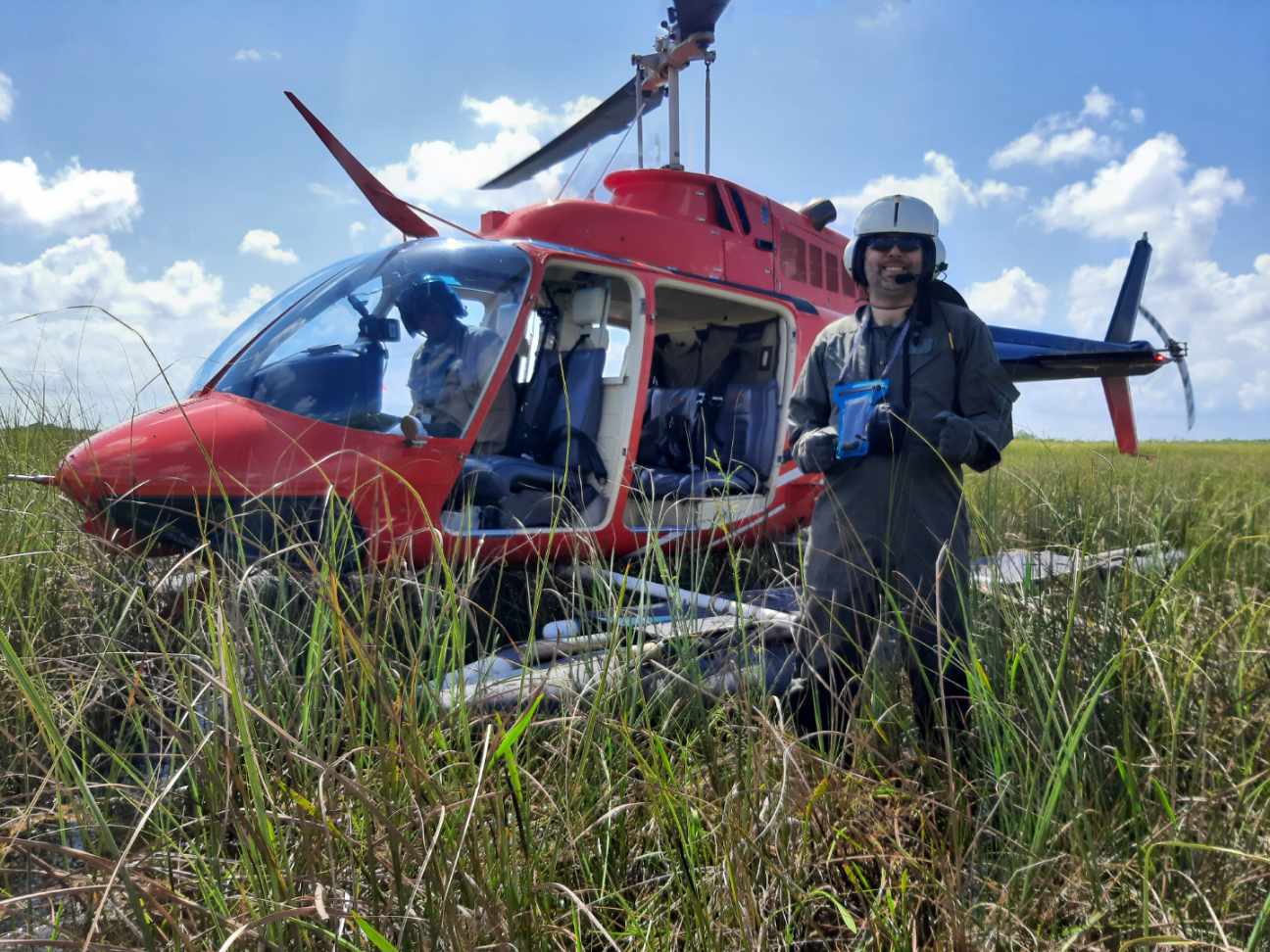
Topmost photo (of Ross at Cooper's Rock State Forest) by Susan Moyle Studlar. 
Photo of Mountain Justice group at Kayford Mountain by Nathan Grant. 
"True Costs of Coal" thumbnail by the Beehive Design Collective.
"Diversify the Economy" photo by Ritza Francois. 
Artist unknown for "Mountain Justice" logo and "Ross at Capitol" photo. 
All other images by Ross Wood Studlar. © to respective creators.

Quotes 
Other quotes from my own records/ memory.

Recommended Further Reading / Viewing
Days of Destruction, Days of Revolt by Chris Hedges and Joe Sacco
The Last Mountain directed by Bill Haney
Gasland directed by Josh Fox


Friday, March 8, 2013

Slingshot!

To any who dwell in the San Fransisco Bay Area of California, be advised to pick up issue #112 of Slingshot!  The famed and free radical newspaper can be found at the Long Haul in Berkeley, or in various cafes and street corners across the bay area. This latest edition contains an illustration by yours truly--and one by my friend the artist and nature interpreter extraordinaire Lesley McClintock. 

The editors of Slingshot gladly accepted my drawing of a battle between a cougar and a wolverine.... and embedded it within an essay by Steph Turner about "Narrative Sharing" as a means of rethinking communication and transcending political differences.  Evidently, my battling beasts have not mastered this skill.  Or perhaps they have, with narratives of "This caribou carcass is mine!" "No, it's mine!"  Or perhaps the meanings of the wolverine's snarl and cougar's hiss are lost in translation.


Lesley, meanwhile, took it upon herself to illustrate a drama of epic proportions.... As oil pipelines slash through the United States and Canada, they wreck forests, farmlands, and the traditional homes and territories of indigenous peoples.  In British Columbia, 66 kilometers south of the colonial town of Houston, a brave team of Native Canadians--the Wet'suwet'en--have chosen to resist.  Their territories are due to be ravaged by the proposed Enbridge Northern Gateway and Pacific Trails Pipelines (PTP).  In response, they have built a permanent encampment, directly in the pathway of said pipelines. The Unist'ot'en Camp includes a cabin, smokehouse, root cellar, outhouse and sauna; and is permanently occupied by members of the Unist'ot'en and Likhts'amisyu (both clans of the Wet'su'wet'en.)  They grow berries and crops in traditional farming practices (effectively permaculture.)  They also practice traditional governance and claim sovereignty, noting that their lands were never ceded to the Canadian government.  The Wet'suwet'en anticipate a total victory in their fight against the "carbon corridor."  I hope that they succeed


Generally, I have been feeling the burn and the freeze of the climate crisis and fossil fuels, as my recent string of blog posts might indicate.  I agree with the words of wisdom by the astrophysicist Neil deGrasse Tyson: “Aliens might be surprised to learn that in a cosmos with limitless starlight, humans kill for energy sources buried in the sand”.

Pipeline illustration by © Lesley McClintock, accompanying an article in Slingshot by © the Unist'ot'en Camp Collective. Said article was the source of information for my paragraph on the Unist'ot'en Camp.

Wednesday, February 20, 2013

United against the Midgard Pipeline


More than a few comic book villains have attempted to destroy the world by weather. The Mighty Thor #327 (Marvel, January 1983) gives a classic example. Thor's mythological arch-nemesis, The Midgard Serpent, coils his body in around the Earth, and gives the planet the python squeeze. The result: “all earth is ravaged by one disaster after another—typhoons and monsoons, quakes and mudslides, floods and fires.”[1] Thor rides a magical sailing ship into outer space, and hooks the giant snake with a giant fishing line. And then the thunder god performs his most iconic feat of superlative strength.

Today, we know that the power to cause planet-wrecking extreme weather is not the sole prerogative of fantasy monsters or mad scientists. By our relentless burning of fossil fuels, we humans have caused a radical shift in the earth's climate. And now, we face the droughts, floods, hurricanes, and forest fires that result.

In real life, there are no superheroes to fly in and save us. We must be the change. That is why, at 6:30 AM on the frigid morning of February 18th, 2013, I left my home in Morgantown, West Virginia, to meet a pair of buses. Their passengers: the local branch of the Sierra Club. Their destination: Washington, DC. I boarded one of the buses, found a seat, and made myself comfortable, for a long day awaited.

We were headed for a rally, called Forward On Climate. Its purpose: to demand that President Obama take action to solve the climate crisis, beginning with a rejection of the Keystone XL Pipeline. The proposed 1700-mile pipeline would transport dirty tar sands oil from Canada to refineries in Texas, and have catastrophic effects on the global climate. If the pipeline is the Midgard Serpent, the protestors seek to muster the power of Thor.

On the night of February 17th, I made sure to pack a full water bottle, a full lunch, a camera with full batteries; and to lay out well-insulated long underwear and outerwear, to don in the morning. And then I set to work on a painted sign. I chose a pika as the star. After four rounds of seasonal work as a Park Ranger at Crater Lake National Park, I am fond of these adorable rabbit-relatives, and aware that global warming threatens to exterminate them. I puzzled over how to illustrate the link between a pipeline and a species dying from overheating; family members lent ideas. And so, after three hours with pencils and acrylics, I had a totem to be proud of, and to take marching.


I found some new friends onboard the bus, from among the diverse crew of students, professionals, and retirees. While I talked to Steve the philosopher, an older gentleman walked down the aisle, and offered bottles of water to his fellow activists.  I had my own water and tea; I also gulped down a few handfuls of trail mix as the bus approached DC, but forgot to eat lunch, being full of anticipation for the rally.

As the bus arrived on the National Mall, we saw a long stream of people, en route to Forward on Climate, with signs and flags in hand, and the Washington Monument behind them. “It is a good day for the first amendment,” said Steve. Indeed, and a good day for democracy. We joined the stream. Our stream fed into a great lake of people, in the field by the Washington Monument. Many people together held up a giant model pipeline, with the words “Separate Oil and State” blazoned across it. The familiar thump of AC/DC's “Back in Black” played through speakers, to give the crowd some preliminary vigor.


My cell phone rang; it was Mike, my friend from The Homestead. It was hard to talk over the boom of the music, but I told him to find me by my pika sign. And so we met up. And so we turned our attention to Reverend Lennox Yearwood, on stage. By turns, he prompted the crowd to shout, pump, jump, and hug each other. By turns, he introduced leaders from diverse movements, who had united against Keystone XL. Each gave their address to the crowd. We heard the provocative words of the environmental activist Bill McKibben, the Sierra Club Executive Director Michael Brune, the green jobs guru Van Jones, and the Chief of the Saik’uz First Nation Jacqueline Thomas, who traveled from British Columbia, Canada, to speak against the pipeline. She warned us of the devastation the pipeline would wreakupon her community, neighboring communities, animals and plants. Van Jones warned that all the good President Obama has done or will do will be wiped out by floods, fires, and superstorms if he fails to act now to address the climate crisis. He warned that an approval of the pipeline would be like “lighting a fuse on a carbon bomb,” and that before the Pipeline runs over farmland and small towns, it will first run over “the credibility of the President of the United States of America.” Bill McKibben hailed the crowd of demonstrators for their work on behalf of the Earth. He said: “you are the antibodies kicking in as the planet tries to fight its fever.”[2]  Senator Sheldon Whitehouse from Rhode Island also spoke to the crowd, and assured us that the President is on our side concerning the climate crisis, but avoided a direct mention of the looming threat of Keystone XL.

I held my pika poster high, and pumped it vigorously when the speakers made key points. Simultaneously, other demonstrators waved their signs, clapped, tooted on whistles, and shouted in approval. Frequently, the winter wind gusted through. It caught my sign like a sail. I struggled to keep it in the air, and braced it variously with either arm, both arms, my shoulder, or my head. From training in Brazilian Jiu Jitsu, I learned to rely on body positioning and leverage, not brute strength, and to brace weight against any of my four limbs, my torso or my head, as the situation called for it. Even so, my arms grew tired.

Despite multiple layers of clothes, the winter cold fond its way to my flesh by the end of the speeches. I was ready and raring to march. And our lake of people became a river, which flowed to the white house.  Quickly, I felt warm and energized.


I couldn't keep track of my team from West Virginia for long. And so I marched among people Wisconsin, Minnesota, Virginia, and Vermont. I marched behind a group of college students from Massachusetts, who brandished a banner that said “We must rise faster than the seas.” I marched alongside a reporter from The Progressive Magazine, and the editor of the Hur Herald. I met a young woman who was thrilled to see the Pika on my sign; she had spent the summer in the mountains of New Mexico, conducting scientific research on the pika populations. I met a father-daughter team. She rode on his shoulders, and displayed a sign reading “For my future, stop the pipeline.” There were people dressed as polar bears, and people dressed as caribou. There was a puppet of a sandhill crane. There was a giant puppet of the statue of liberty. Her sign read “It's not easy being green, but we must.” Musicians beat their drums. We chanted “Hey, Obama, we don't want no climate trauma!”


Over 130 buses came from 28 states. Over 100 different organizations joined forces to make the rally happen. Over 40,000 people made the march to the White House, to tell President Obama to say No to dirty tar sands oil, and Yes to a clean energy future. In San Francisco, California, another 5,000 marched with the same message.  Thousands more rallied in at least 23 other cities; and thousands have written or called the President.  I am unsure of the exact total number of people in this movement, but it is big.


Opponents of Keystone XL include 18 of the nation's top climate scientists, who voiced their opposition in an open letter to President Obama in January 2012. NASA scientist James Hansen signed the letter, and went further. On February 13th, 2013 he joined 47 other activists outside the White House, to demand that the President “Lead on Climate, Reject KXL Pipeline.” Among them were the aforementioned Bill McKibben and Michael Brune, the lawyer Robert F. Kennedy Jr., the actress Daryl Hannah, and the Sierra Club Board President Allison Chin. Brune and others strapped their wrists to the fence. The police arrested the group for failure to disperse and obey lawful orders. Brune and Chin became the first-ever leaders of the Sierra Club to engage in civil disobedience, and the first-ever to be arrested for said actions. Hansen, McKibben, and others were arrested previously, in a similar protest in August 2012.

Thousands have poured their heart and passion, fire and love into stopping this Pipeline. But ultimately, the decision is up to President Obama. We hope that he stands up to the promises of his recent speeches, and rules in favor of the world's children and future generations (not to mention present generations! The climate crisis is already upon us, and will get much worse if we don't act now.) With a stroke of his pen, he can lift the Midgard Serpent.


Epilogue: It was a dark and snowy bus ride back to West Virginia. The fellow who had given water in the morning now offered pepperoni rolls. There can be no doubt that he was a longtime West Virginian. Few other states know of the greasy slabs of cured pig-meat surrounded by seasoned bread. I declined, being content with the humus sandwich and peach that I had forgotten about earlier.  Other people (including Steve) devoured my home state's signature food.  When we crossed the border of West Virginia, the giver of pepperoni rolls took out a harmonica and played John Denver's “Country Roads.” Every activist has a unique home to protect from global climate disruption.  For at least one, it is the mountain state, land of processed meat and folk music.


Footnotes:
1. Comic pages/ quote from Thor #327, written by Doug Moench, penciled by Alan Kupperberg, inked by Jim Mooney, colored by George Roussos, lettered by Janice Chiang; copyrighted to Marvel comics. Low-resolution reproduction used here for educational purposes only.
2. For recordings of the speeches, see the Democracy Now! episode from February 18th, 2013.
3. Photos: Rev. Yearwood photo by © Shadia Fayne Wood of Project Survival Media. Photo of Ross by a skillful bystander. Other photos by Ross.

Sunday, February 10, 2013

Bear goes a-sniffin' ; Countdown to Feb 17


Bears are fun to draw.  Simultaneously endearing and frightening.  This one is a black bear (Ursus americanus), whom campers across America must reckon with.  For the bear's nose is strong, as is its curiosity; and should the bear get a bite from your picnic, it shall become ravenous for more. (Note: the bear image is a panel from a comic book that I'm working on, the same comic as featured in my "Marmot TV" post.)

Like so many other animals and plants, bears of all types are feeling the heat from global warming. They face threats from declining food resources to melting ice shelves.  I'll be thinking of the bears, and the caribou, and the pikas, and the whitebark pines, and so many other living creatures when I board the bus for DC on February 17th. Wish me luck.  And I hope to see you there!


Forward on Climate icon by the Sierra Club, and they encourage us to share it broadly.  And you still have time to sign up for the rally or support it on Thunderclap!


Sunday, January 27, 2013

Environmentalists unite against Keystone XL!


On the national front, one item of news especially caught my attention this week.

The Sierra Club has recanted their 120 year old policy against civil disobedience. For the first time ever, they'll join in act of peaceful civil resistance—to oppose the Keystone XL pipeline. After hearing this news, I was inspired to join the movement too. I have signed up to march on Capital Hill on February 17th. You can join as well, via 350.org.

And watch this video, to get psyched!


Additionally, I sent my letter to President Obama, to urge him to to block the Keystone XL Pipeline. Among other things, I said:

"Your administration faces a stark choice on whether to take serious, concerted action to solve the climate crisis. Superstorm Sandy gave us a hint of the destructive power of global warming. If global warming continues unchecked, extreme weather events will exacerbate, to make the 2012 spate of record-breaking heat, forest fires, droughts, and hurricanes seem modest by comparison.

.........

The real path to economic prosperity is the creation of new jobs to convert America to a green economy, with solar energy, public transportation, local organic farms, and strong investments in parks and public lands. Public works programs and initiatives for green energy will simultaneously lift the economy and reduce global warming. The Keystone XL Pipeline does neither.

I urge you to stand by the eloquent promises of your inauguration speech. “We will respond to the threat of climate change, knowing that the failure to do so would betray our children and future generations.” In order to meet your stated goals, the Keystone XL Pipeline must be stopped. "


The people of CREDO Action sent an open letter yet stronger than mine, a few excerpts of which I will post below. (Click here for full text or to cosign the letter.)

To meet your call on climate change, your "all of the above" energy policy must end.
 
“Your support for fracking and drilling, coal mines and pipelines, continues to obliterate the progress you could be making with your administration's gas mileage rule, or your investments in renewable energy. Even if you finally issue a carbon pollution rule that addresses existing sources of pollution, it will mean nothing if you are simultaneously lighting the fuses on carbon bombs by approving the Keystone XL pipeline, Arctic drilling, or fossil fuel export projects.

.....


Mr. President, we are urging you to do as our other Illinois president did when confronted with the great moral issue of his time: to take bold, decisive action to end one great societal ill, changing the economy in the process, and usher in a new era of American freedom, security and prosperity.
 
“This is the moment. We will support you. But you must lead and take action, starting first and foremost with your rejection of the presidential permit required by the Keystone XL pipeline, which is your decision and yours alone.” 

It is my hope and expectation that we will succeed to block this pipeline. However, for permanent success, there must be a systemic change of the sort that the CREDO authors mention. Our federal government should launch a project to transition to a green economy. And we could create millions of jobs in the process. We need a project whose magnitude equals or exceeds that of Franklin Roosevelt's New Deal ... a “Green New Deal” to borrow a term from 2012 Green Party presidential candidate Jill Stein. Frustratingly, I have not yet seen a loud enough public outcry for such an undertaking. I hope that the proposed Keystone XL pipeline can serve as a wake up call. First, we must stop the pipeline. Next, we must attack the problem at its source, the outmoded energy policy and infrastructure which creates the demand for dirty tar sands oil. The shift won't happen easily. But with so much at stake, it is time that we start acting with the same drive and determination which once put humans on the moon.  Or to quote President Obama: "Yes we can!"


Video by folks from 350.org; CREDO letter by Becky Bond, Michael Kieschnick, and Elijah Zarlin; © to respective creators.