Showing posts with label Utah. Show all posts

Saturday, January 3, 2015

Searchers for Greatness in 2015


Inevitably, the changing of the year is a time of reflection. A review and reassessment of the recent past, and a moment to plan and hope for the future. A time when millions of Americans resolve to go to the gym, and most don't make it past January. Although fitness is important, these people are not thinking big enough. Former congressman and highly-progressive presidential candidate Dennis Kucinich has a broader and more visionary new year's resolution for America, which includes a full-employment economy, an end to NSA spying, reparations for the wars in Iraq and Afghanistan, and a transition to sustainable forms of agriculture and energy, to halt global climate change. My resolutions and yours should be similar in scope!

Geographically, my 2014 spanned across many parts of the western United States. Although I still need to think bigger when it comes to accomplishments for the world, it is nice to look back with a bit of awe at all the red monoliths I saw and the frigid waters I stomped through. It is wise to pause and feel some wonder at our amazing world, a quest assisted by photos like these and these.

For the long-winded Studlar family holiday letter, I wrote the following for my part:

“Ross has continued to work in National Park Service sites that feature caves. He finished a volunteer post at Wind Cave, was a summer Ranger at Timpanogos Cave, and then reprised for the winter a seasonal Ranger job at Carlsbad Caverns (held previously in summer 2013.) This all happened because one cave park led to the next—Ross is still a forest dweller at heart! Timpanogos Cave has its fair share of forests as well, with a daily hike up a rocky mountain required to reach the trio of glittering caves, the last and most impressive of which (the monument’s namesake) features many thousands of helictites—formations that resemble writhing snakes. With its comparatively small staff, Rangers at Timpanogos Cave must wear multiple hats, which Ross was glad to do. He guided cave tours and tours of Cascade Springs wetland; patrolled the mountain trail; acted as a primary EMT; and created portions of the Junior Ranger activity books for children. He wrote and drew a comics story about a Townsend’s big-eared bat and a Packrat who have an adventure in the caves, giving the National Monument a rare and innovative edition for its Junior Ranger program. Timpanogos Cave is in the heart of Mormon country. And, unlike most National Parks, the majority of its rangers and visitors are local. Ross was able to make friends across the boundary, even staying with an LDS family for several nights after the season was over .Back at Carlsbad, Ross partook in the Rock of Ages historic lantern tour, a special holiday production, wherein the modern Cave Rangers donned costumes and impersonated key people from the park’s history. Ross portrayed Ray V. Davis, the photographer whose work alerted the public and authorities to the wonders of the caverns, leading to their inclusion in the National Park system in 1923. Ross took pride in playing a fellow artist. In between seasons, he made trips (sometimes solo and sometimes with friends) to the great Sequoias; to wilderness areas of Oregon; and to Zion, Bryce Canyon, Monument Valley, and other legends of the southwest. He agrees that the family trip to Yellowstone was amazing! He transcribes his adventures and draws stories about animals and monsters whenever he can. Follow him at rosswoodstudlar.blogspot.com.”

Using a photo from Monument Valley Tribal Park (taken for me by one of their Navajo guides), I created a spoof movie poster. This made a special Christmas gift for my father. He is a proud Texan, who grew up in the days when John Wayne dominated the box office.....


Happy New Year to all and Hope for a better 2015!

Thursday, November 13, 2014

In the Footprints of Seldom Seen Smith


Edward Abbey was born in Pennsylvania. At age eighteen, he went on a westward trek, by foot, bicycle, and train-hopping; cross-continent to California, and then east to the southwest. When he landed in the four corners area, he knew he had found home.
Interestingly, my journey has some parallels with his. A child of the eastern United States (Kentucky, West Virginia, Ohio, Vermont), I too take awe and inspiration in the great size of the west. At some undefined point on the westward drive, the landscape opens up, the sky and the earth become larger, and one can see for vast distances. Somewhere in the deserts of Arizona or New Mexico, the red monoliths and orange plateaus appear. And the giant cacti and snow-covered mountains. And the oil wells, some with their wasteful flames of natural gas atop, burning day and night. And the haze in the air from coal mines, hidden from sight.

I have been in the southwestern United States for most of the past two years, and have generally been on the western side (coast or inland) for the majority of the past seven. The east still feels like home to me, and probably always will; the west is an alien landscape of wonder, and I am an astronaut on a long journey.

Although my compass may point in a different direction from Ed Abbey's, I have nonetheless come to inhabit some of the same haunts, and even work for the same institution (the National Park Service.) Anarchist rebel Abbey spent some years as a Ranger at National Park Service sites including Arches, Organ Pipe Cactus, Lassen Volcanic, and Everglades.) And last spring, I got to know the direct action branch of the environmental movement, for which Abbey is the spiritual and philosophical founder. His novel The Monkey Wrench Gang—featuring four renegade idealists who decide to preserve wild nature by ripping up highway survey markers, sabotaging bulldozers, and blowing up automated coal trains—is one of the very few fiction books which had a direct and measurable impact on the real world, as radical environmentalists like David Foreman sought to emulate the tactics of Abbey's characters. The resultant movement of Earth First! brandishes on its website artwork based on the original cover to Abbey's book, even today, 38 years after its publication. Abbey's character George Washington Hayduke, the muscular, binge-drinking green beret veteran who applies his combat training to save deserts from "progress," is a character of mythic proportions. And the verb “to monkeywrench,” meaning “to conduct righteous sabotage” (derived from the title), has become a permanent addition the English language. Real monkeywrenchers, like Abbey's characters, follow a strict code of no violence to people; they destroy machines (and take inspiration from the Luddites.)


To be clear, there is more than one kind of direct action—the activist can wreck bulldozers with corn syrup or block their path with her body. The direct action groups which I visited and worked with (such as Mountain Justice) do not engage in property destruction, only civil disobedience. 


And if we're lucky, the forces earth and sky can conduct some direct action of their own. In a vivid early scene in Abbey's book, Seldom Seen Smith (a tall slender “Jack Mormon” and monkeywrencher) rediscovers his religion when he stands before the Glen Canyon Dam. He gets down on his knees and prays to God to send an earthquake, to fix this “temporary plug” in the beautiful Glen Canyon. He receives no answer.


On my visit to the Glen Canyon Dam, I hoped to impersonate Seldom Seen Smith in prayer, purely for fun. Being alone and concerned that I might raise suspicions, I decided not to. I had to take humor at the high level of security at the dam. Patrol cars patrolled, and a big white man security guard trailed the guided walking tour I partook in, led by a young lady Navajo guide, working for the Bureau of Reclamation. The guard kept in the distance, just close enough to be intimidating. Before the tour, I had to run to the car to drop off the Leatherman multi-tool and matches which I normally carry. Any mention of bombs or sabotage on the tour, jocular or otherwise, would result in expulsion from the site. I wasn't bold enough to ask if the same rules applied to a mention of the names Seldom Seen Smith or George Washington Hayduke. I wanted to complete the tour, and take in my fill of pro-dam propaganda. The dam was a fascinating window into the post World War II-era, and America's quest to build big stuff, conquer nature, dam 'em all, and reach a new Manifest Destiny. Something you won't hear about on the tour: many of the early battles of the environmental movement, from John Muir's time through the 1960s, were over dams. After a coalition of environmental groups led by the Sierra Club successfully blocked dam projects for the Colorado River by the Grand Canyon and the Vernal River by Dinosaur National Monument, they did not fight the Glen Canyon Dam, as a compromise. David Brower (then-executive director of Sierra Club) still agonized over this decision, decades later. Today, there are fewer dam proposals and more mountaintop removal, fracking, nuclear plants, and oil pipelines. We have moved out of the frying pan and into the fire.


Strangely enough, the bookstore at the dam still had Abbey's books for sale (but not The Monkey Wrench Gang!) Regardless of politics, Abbey is probably the most articulate and oft-quoted scribe of the desert environment. His memoir Desert Solitaire is considered by many to be the Walden or the Sand County Alamac of the desert. Abbey was a great proponent of getting out and exploring and experiencing the wild world, giving him a fan base among outdoor recreationists, whether or not they share his radical philosophy.

Before visiting Glen Canyon, I visited Zion National Park. There, I overcame my trepidation towards cold water and hiked 'The Narrows.' My adrenaline surge overwhelmed my tendency to freeze, and I charged forward, with frequent stops for photos (most of them terrible because of the weird lighting inside a canyon). “This is awesome!” I declared to a young couple of hikers, as we both stood on the dry land of the same rock before the next plunge. I charged onward for hours, through water knee-deep and occasionally chest-deep, and turned around when my adrenaline started to wane.


Edward Abbey articulated well the feeling of being alive and immersed in the great earth, when he described a similar scene, wherein Seldom Seen Smith led a raft trip through a canyon down a river. “The river, the canyon, the desert world was always changing, from moment to moment, from miracle to miracle, within the firm reality of mother earth. River, rock, sun, blood, hunger, wings, joy—this is the real, Smith would have said, if he'd wanted to. All the rest is androgynous theosophy. All the rest is transcendental transvestite transactional scientology or whatever the fad of the day, the vogue of the week. As Doc would've said, if Smith had asked him. Ask the hawk. Ask the hungry lion lunging at the starving doe. They know.” 


As I warmed my feet by the fire, under the cottonwoods of South Campground with the rock monoliths in the distance, I knew too.


Topmost photo taken at Grand Staircase-Escalante National Monument.
Monkey Wrench cover is copyrighted either to its artist or publisher, low resolution reproduction used here for educational purposes only.

Wednesday, October 29, 2014

Thor's Hammer and other Indelible Icons


Bryce Canyon National Park has filled me with awe and wonder, with its natural ampitheatre and hoodoos—sometimes they look like the turrets of an epic castle, striated in orange and white; sometimes like an army of stone soldiers, standing tall and in formation. In Pauite legend, they are people turned to stone by coyote for their evil deeds. In geology, they are the result of erosion of the Claron Limestone, primarily water that percolates then freezes (frost-wedging.)


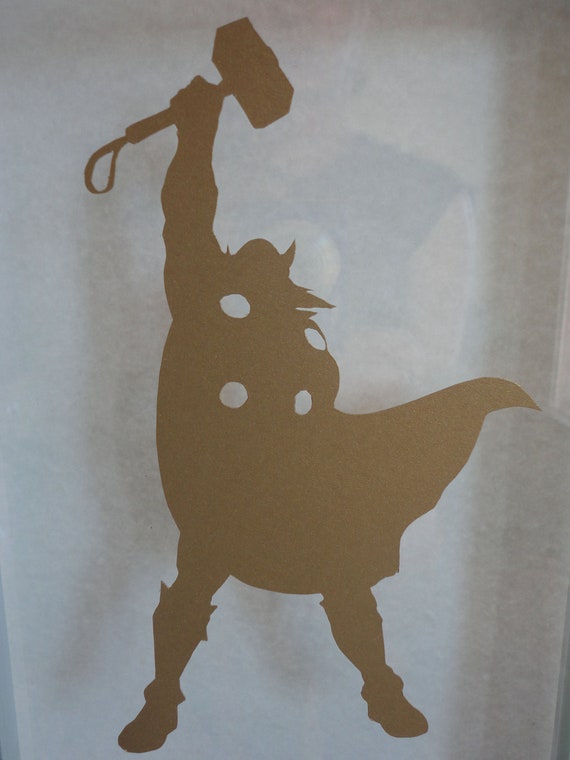
Not surprisingly, I became fixated on Thor's hammer, and wielded my brushes and brush pens and oil pastels to produce a few drawings. Yes, nature meets culture here for me, being that I thrilled to the adventures of the thunder god (especially Marvel's rendition) in my young days and my older ones. How appropriate that the first Thor comics epic I read was “The Flame, The Frost, and The Fury!” (issue #425, by Tom DeFalco and Ron Frenz) wherein the thunderer battles Sutur the Flame Demon and Ymir the Frost Giant to avert Ragnarok (the Norse apocalypse.) Plenty of flame, frost, and fury has shaped the landscape of Bryce Canyon!

After bouts of drawing and hiking, I visited the Visitor Center, to discover Thor's hammer emblazoned on various post cards and posters and calendars and tote bags. The icon of Bryce Canyon!

Most National Parks have their icons, and normally it is some object with a very distinctive shape. At Timpanogos Cave National Monument (where I worked last summer) that honor belongs to the Great Heart of Timpanogos. Park visitors' preoccupation with the Heart was sometimes a source of frustration for some of my fellow rangers, because although the Heart is majestic, it is a large stalactite, similar to ones found in many other limestone caves. The truly exceptional feature of Timpanogos Cave is its Helictites—very few other caves in the world have them in such number and diversity. The greatest concentration of these is found in the Chimes Chamber; they resemble worms of snakes, and their growth seems to defy gravity. Whatever the merits of the helictites, the Heart's iconic shape has a way of cementing itself in the longitudinal memory of the average visitor, above all other cave features, save the darkness (according to an informal survey.)


Iconic shapes—objects unmistakable in silhouette—must occupy a deep and potent place within our imaginations, perhaps even amygdalas, reinforced by millions of years of evolution and survival. (I wrote about this previously in my post “Silhouettes and Night Encounters.”) Religions have their icons, such as the cross for Christians and the circle for many American Indian belief systems. Many of the most successful characters in comics and animated cartoons have a distinctive shape—Batman, Wolverine, Popeye, Betty Boop, Bart Simpson, Dick Tracy, Calvin and Hobbes, etc. These characters are unmistakable in silhouette—just like the famed icons of the National Park system! These include the Sequoia tree, the Bison, Old Faithful, Wizard Island, Mount Rainier, Delicate Arch, the Three Patriarchs, etc. The park ranger in a flat hat is an iconic character too. I strongly suspect that these ink drawings, ancient rocks, and uniformed public servants all tap into the same deep recesses in our brain. Outlines are all-important to how we see the world—what camouflage does is break up an animal's outline, so they are seldom seen. And so the recognition and memory of distinctive outlines with certain characters or features must have been fundamental to our survival, whether to stay away from a lurking lion or to navigate by sun, moon, and landmarks.

And so I sat on the Navajo Loop trail, and tried to depict every crag and crust and ridge of Thor's hammer, my hands caked in ink and graphite, my jeans covered in gray limey soil. The clouds moved past in the deep blue sky behind the red rocks. Tourists came by, most photographed the hammer, and some photographed me at work as well. To me, the hammer meant power and dominion over the sky and storms. I couldn't help but imagine the sky turned to black, and lighting blasts sent from the hammer, to blast away flying saucer invaders to our world!


Thor (superhero) is trademarked to Marvel Comics. Low-resolution image (as designed by Myriah Hankins--unsure of original artist) is used here for educational purposes only.

Thursday, May 29, 2014

Ancient Realms (and Old Times) Revisited


I must give my props to The Museum of Ancient Life, at Thanksgiving Point, Utah. Its exhibits told chronologically the story of life on Earth, beginning with the unicellular, moving through the Precambrian seas, and on to that part of the ancient past which has long captured the imaginations of youngsters (and imaginative oldsters)--the Mesozoic Era, the age of dinosaurs (and gymnosperms!) The skeletons or replicas on display were set such that I felt like I walked through a jungle populated by the giant reptiles—sauropods thundered past, and raptors lurked among the cycads, poised to leap from the shadows or strike from above. Although they would rather eat me, I also thought of the dinosaurs as old friends from my youth, having populated my picture books and stop-motion movies, my imagination, and the typing paper which I filled with drawings by number two pencil, and colored pencil, and crayon. There was the ravenous Tyrannosaurus Rex, the horned Ceratosaurus, the giant turtle Archelon, the giant amphibians, the mountain-sized Supersaurus, and Pachycephalosaurus (interpreted in the display as using its hard round skull as a battering ram). The awe and fear and admiration I had felt as a child for these extinct beasts returned vividly; I survived my encounter with the Utah Raptor and departed full of blood and electricity. Many great fossils have been found in Utah, including those of Dinosaur National Monument (which straddles the border between Utah and Colorado.) At least for the moment, I was glad to be in this odd and beautiful state.


Photo stars from top down: Many skulls with Archelon at far left middle, giant amphibians, Supersaurus, T-Rex, some kind of theropod. Thanks go out to the couple of unknown bystanders who photographed me with the Dinos!

Thursday, November 21, 2013

The Wonders of Arches and Canyonlands


Chaco Culture and Mesa Verde were places to remember. However, solitary travel wore on me. Packing and repacking the car was always up to me, and so was driving. There was no opportunity for 'I'll plan the course while you fill the tank with gas and thermos with tea'; every small step had to be taken by me, and me alone. Nonetheless, I anticipated gladly arrival in Moab,Utah. My first visit to this place occurred twelve years ago, when I was a freshman at Denison University. The then-president of the Denison Outing Club, a fellow named Andrew, described Moab as a “Mecca” for outdoor recreationists. With Arches National Park right at the doorstep, Canyonlands National Park not far away, and thousands more acres of remarkable public lands in all directions and inviting adventure, Moab is well-situated. I was glad to see that Poison Spider Bicycles was still there, and still had the same ominous mural on the side of the building. The post card of that mural, which I sent to my parents after I rode Slickrock Trail on my last venture to Moab, is still up on the bulletin board, back home in West Virginia.

 I discovered the Lazy Lizard International Hostel by a search on the internet. I arrived at night, with an approximate location given by GPS, but the lights were dim. After circling my blue Subaru Outback a few times around the gravel parking lot of a host of storage sheds, I found the hostel on the other side of the fence. I nervously entered the old refurbished house and payed the uniquely low price of $11 for the first night, for a bed and locker in the dorm, and access to shared bathrooms with hot showers, and the kitchen and common room. In the common room, American and Australian guys gathered on the couches and chairs, and watched and discussed Monday Night Football. Uninterested in the game, I sat at a table near the back by the kitchen, plotted my trip to Canyonlands, and interjected a few off-hand comments about America's most corporate sport. And then something piqued my interest. Three young women, fair-skinned and dark-haired, gathered at a table near to mine, ate spaghetti and conversed in French. After gathering my nerve I approached, and struck up a conversation about the archeological wonders I had seen in New Mexico. As I suspected, they spoke english too. They had come from Switzerland and France, on vacation from their varied vocations and schools, and were on a trek across the western U.S., to experience its marvels. (In addition to universal health care, Europeans get longer vacations, making all of this possible.)

The next day, I toured Arches National Park, alongside my new friends—Laure, Celine, and Flavia (left to right in the full group photo at Arches.) We rode in their red rental sedan, with American hits like Johnny Cash's “Ring of Fire” and Lynyrd Skynyrd's “Sweet Home Alabama” sounding through the speakers. We went from one of the famous Arches and its associated short trail to the next. I was relieved to no longer be traveling alone, and happy to have more than one form of natural beauty to observe in the southwestern deserts.


Arches National Park is a landscape that inspires. On my previous visit, I did some of my best photography (still to date), with a small 35-mm film camera. Now, I was awed again. The red and pink and orange sandstone, in impossible loops and spires and bridges, towers above and around us, invites climbing, and walking through. The blue sky extends for vast distances in all directions, and errant clouds paint streaks above the arches. In the far distance are snow-capped mountains, after long stretches of desert and layers of shrubs and sandstone. I felt small among the arches, not much bigger than the dark-colored crustose lichens which grew on the rocks. And I felt that I was looking through windows into near and distant worlds, disbelieving that I was still on earth.


Arches gave inspiration to Edward Abbey (1927-1989), where he worked as a backcountry ranger. The cantankerous outdoorsman authored many books, and became an icon to an impressively broad range of earthly people, including outdoor recreationists, park rangers, nature writers, wilderness advocates, and radical environmental activists. Abbey's novel The Monkey Wrench Gang became a sort of blue print for some forms of environmental direct action. Abbey's memoir Desert Solitaire left its mark on me; and I still quote its passages on vultures, and on the many ways to view Delicate Arch....


We posed before Turret Arch, and Double Arch. We looked through Landscape Arch, where the landslide had occurred in 1991. Along the way I chatted with Flavia about skiing the alps, the superior cheeses found in Switzerland, the wonders of Crater Lake, and my sysphian labor efforts when I worked at a nursery with a despotic manager. In the mid-afternoon, we set out on the trail to Delicate Arch, one-and-a-half miles each way. And I fell silent. I caught the mood of the others who walked this path. Like in a church, they spoke only in hushed tones. And so did I, and kept my camera engaged, photographing the red sandstone hills of reverence.

We arrived at Delicate Arch. The most famous of the arches, whose image adorns countless post cards and book covers. The symbol of Arches, and Moab, and the wild southwest. A sandstone landscape in red pink and orange, reminiscent of Mars. Plateaus and ridges beyond, snowy mountains beyond that. Delicate Arch like a looming gateway, with the blue sky shining through its 'doughnut hole,' and the moon above. As the sun dropped lower in the sky, the arch's shadow grew more exaggerated. If National Parks are secular sacred sites, then Delicate Arch is this temple's most holy place.


On the sandstone surrounding the arch, a dozen or so tourists found places to sit or crouch or stand or lie down, or walked about, as I did, to see the arch from multiple viewpoints. I followed a man with a fancier camera, and photographed the arch from a deep 'worm's eye' angle, after he did. More tourists arrived. Perhaps 25 persons were on the sandstone when the sun set, and turned the pinkish terrain to brilliant orange. Seated next to Flavia and Laure, I let my camera rest, and experienced Delicate Arch with my bare eyes, in its final sunset glory. The same “movie” of sunset by Delicate Arch will happen tomorrow, and the next day, and the next. And the panorama of landscape is grander than anything even CGI can produce. Even in the age of the smart phone, these old entertainments endure. (The nightly mass exodus of bats from Carlsbad Caverns is another example.) As we walked back down the trail, I overheard the young man behind me talk to his friend about how it was good to be reminded of the big grand things of nature which exist beyond ourselves, and represent a scale of time grander than we can imagine.


Apparently, the Delicate Arch ritual has changed little since 1968, when Edward Abbey published Desert Solitaire. The old maverick's words ring true as ever....


“There are several ways of looking at Delicate Arch. Depending on your preconceptions you may see the eroded remnant of a sand-stone fin, a giant engagement ring cemented in rock, a bow-legged pair of petrified cowboy chaps, a triumphal arch for a procession of angels, an illogical geologic freak, a happening—a something that happened and will never happen quite that way again, a frame more significant than its picture, a simple monolith eaten away by weather and time and soon to disintegrate into a chaos of falling rock (not surprisingly there have been some, even in the Park Service, who advocate spraying Delicate Arch with a fixative of some sort—Elmer’s glue perhaps or Lady Clairol's Spray-Net). There are inevitable pious Midwesternes who climb a mile and a half under the desert sun to view Delicate Arch and find only God (“Gol-dangit Katherine where's my light meter, this glare is terrible”), and the equally inevitable students of geology who look at the arch and see only Hyell and the uniformity of nature. You may therefore find proof for or against His existence. Suit yourself. You may see a symbol, a sign, a fact, a thing without meaning or a meaning which includes all things.”


The next day, my friends and I explored the canyons. Our first stop was Dead Horse Point State Park. I was stunned to see what looked very much like another Grand Canyon. We went on to Island in the Sky at Canyonlands National Park, which seemed to contain MULTIPLE Grand Canyons. The environments surrounding Moab are truly wondrous.

I spied an article in the Moab Sun News, that the local Helen M. Knight elementary had undertaken a special project called “Look Where We Live”, to introduce young folks to the landscape of Canyonlands—by painting outside. The project was launched in part because a survey found that only 30 per cent of local children had ever visited Canyonlands. A colloboration with the Bates Wilson Legacy Fund and the National Park Service, the project will culminate in an exhibition of student art to celebrate the fiftieth anniversary of Canyonlands National Park. With or without me, more people are discovering the power of art to connect people and nature. (Or maybe I should say re-discovering: the first person to suggest the idea of National Parks, George Catlin, was an artist, and Yellowstone became the first National Park after congress saw Thomas Moran's watercolor paintings of its shooting geysers and boiling hot springs.)


I hope to return to Canyonlands, and undertake drawing and painting of my own. But for this time, the road beckoned. This adventure was coming to an end. Late in the day as we drove through dusk, Flavia learned of my fondness for heavy metal and Iron Maiden. She had seen the band in concert! Soon “Fear of the Dark” resounded from the speakers, followed by “Aces High.” Then the classic metal riff of Deep Purple's “Smoke on the Water” made a fine compliment to a landscape cast in azure and violet, as we returned to Moab.

The next morning at the Lazy Lizard, I bade farewell to my new friends with hugs and chocolate-covered espresso beans and promises to exchange photos by email. Their red sedan rolled south, bound for Mesa Verde, and eventually California. My blue Subaru Outback went north and east, to go across Colorado and the rocky mountains, through Wyoming, and finally to South Dakota, where work at Wind Cave National Park would soon begin. The prairies awaited, and the great American buffalo.


Photo of Ross at Canyonlands by Celine Vidonne